

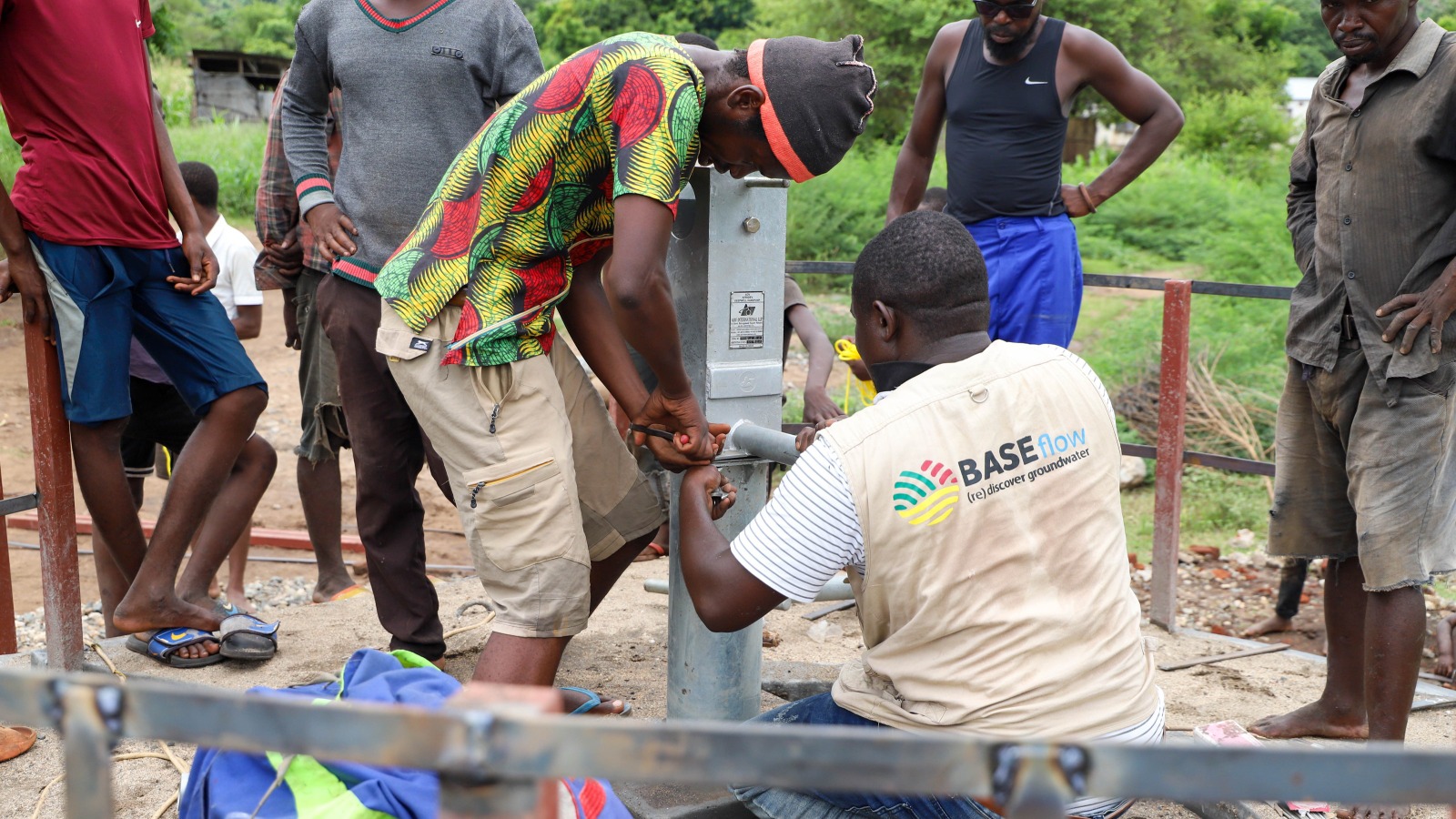
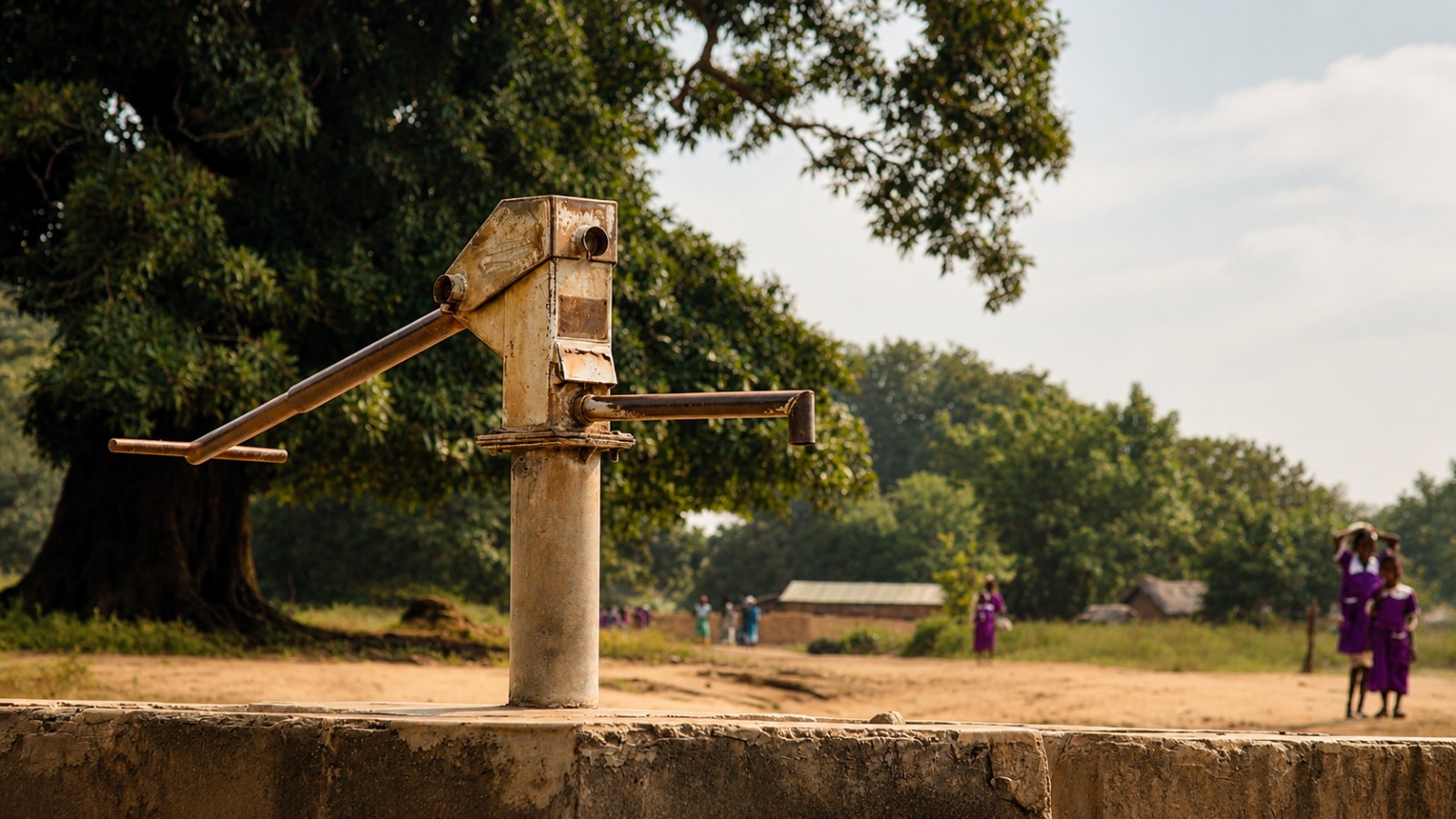
I have been in the water space for several years - an unlikely path, as anyone who knows my backstory will tell you - and every once in a while I get into spirited debates where I'm called the cheerleader-supreme of the lowly handpump, an archaic technology that's holding Malawi back. The discussion rarely provides space for me to clarify that I actually (partly) agree - it is an old technology, but the conversation I want to have is less about the handpump and more about maintenance. Or rather, the philosophy around maintenance, which matters all the more given the fervent excitement about solar-powered piped water supply systems across Malawi.
The data agrees with me.
Across sub-Saharan Africa, one in every three rural handpumps is estimated to be non-functional at any given time. More recent evidence across nine countries found that newer water points perform well, but functionality drops significantly as systems age, highlighting that the challenge is not only construction, but also long-term maintenance (Murray et al, 2024).
To me, this points to a maintenance problem more than a technology problem. This isn't new.
But I have often wondered whether the fundamental issue lies in the philosophy that guides how we design rural water systems. Too often, we begin with, and get excited by, the technology we aspire to build, and only afterwards ask how it will be maintained. Maintenance becomes an operational detail rather than the design constraint. An afterthought.
I believe we should reverse that thinking. It should be obvious, yet it isn't.
We often assume maintenance will somehow take care of itself. Too often, it does not. Before selecting a technology, we should ask whether the institutions or communities responsible for maintaining it have the technical skills, financing, asset management systems, supply chains, and governance needed to keep it working. Those realities should shape the technical design.
This does not mean we should lower our ambitions. Acknowledging these realities isn't being "archaic," as I've heard some say. It's just prudence, plain and simple.
Personally, I find it uncomfortable that we continue to accept communal handpumps as the long-term solution for rural communities. Many families still walk hundreds of metres, sometimes kilometres, to collect water that they carry on their heads back home. Meanwhile, those of us designing these systems enjoy water piped directly into our homes. Rural communities deserve that same level of dignity and convenience.
We should absolutely aspire to piped water systems and higher levels of service. But in low-income contexts like Malawi, aspiration is not enough. Ambition is not a maintenance plan!
If we want more sophisticated infrastructure, we have to invest just as heavily in what sustains it: technical capacity, local institutions, financing mechanisms, spare parts, asset management systems. It's a lot. But it deserves the same attention as the infrastructure itself. If we cannot provide that, then we might as well stick with the lowly handpump, a simpler technology that some technical professionals hate with a passion, but one which many rural communities continue to use because it is a proven and familiar technology suited to their lived circumstances.
Believe it or not, I once came across a rural community that begged our local government partner to rip out the sophisticated solar-powered piped water system in their community and replace it with a handpump. Yes, that handpump! The reason? They weren't ready for it. The technology meant to ease their lives had become just another burden. Another white elephant.
And there are a growing number of those around, aren't there?
After all I have said, what do I - an engineer who disappointed his parents for pursuing theatre once upon a time (long story!) - have to say about maintenance? My philosophy is this: our technology choices should reflect the maintenance capacity we have, not the one we hope will emerge.
Or put another way, technology should match maintenance capacity before it matches engineering ambition. Until we have the maintenance capacity in place for more sophisticated systems, I will stay here in this cheerleading line-up. Guess what? We have a spot for you.
A pom-pom awaits you :-)