

.jpeg)
.jpeg)
.jpeg)
We often say groundwater is invisible. What we don’t say often enough is that the systems meant to protect it remain just as invisible until they fail.
At the start of a recent co-creation workshop, one idea framed everything that followed: in Malawi, we often plan in color, but implement in black and white. We design ambitious systems on paper, but in reality we are constrained by budgets, institutional capacity, and competing priorities. The gap between those two worlds is where many good ideas quietly collapse, not because they were wrong, but because they were never built for the conditions they would face.
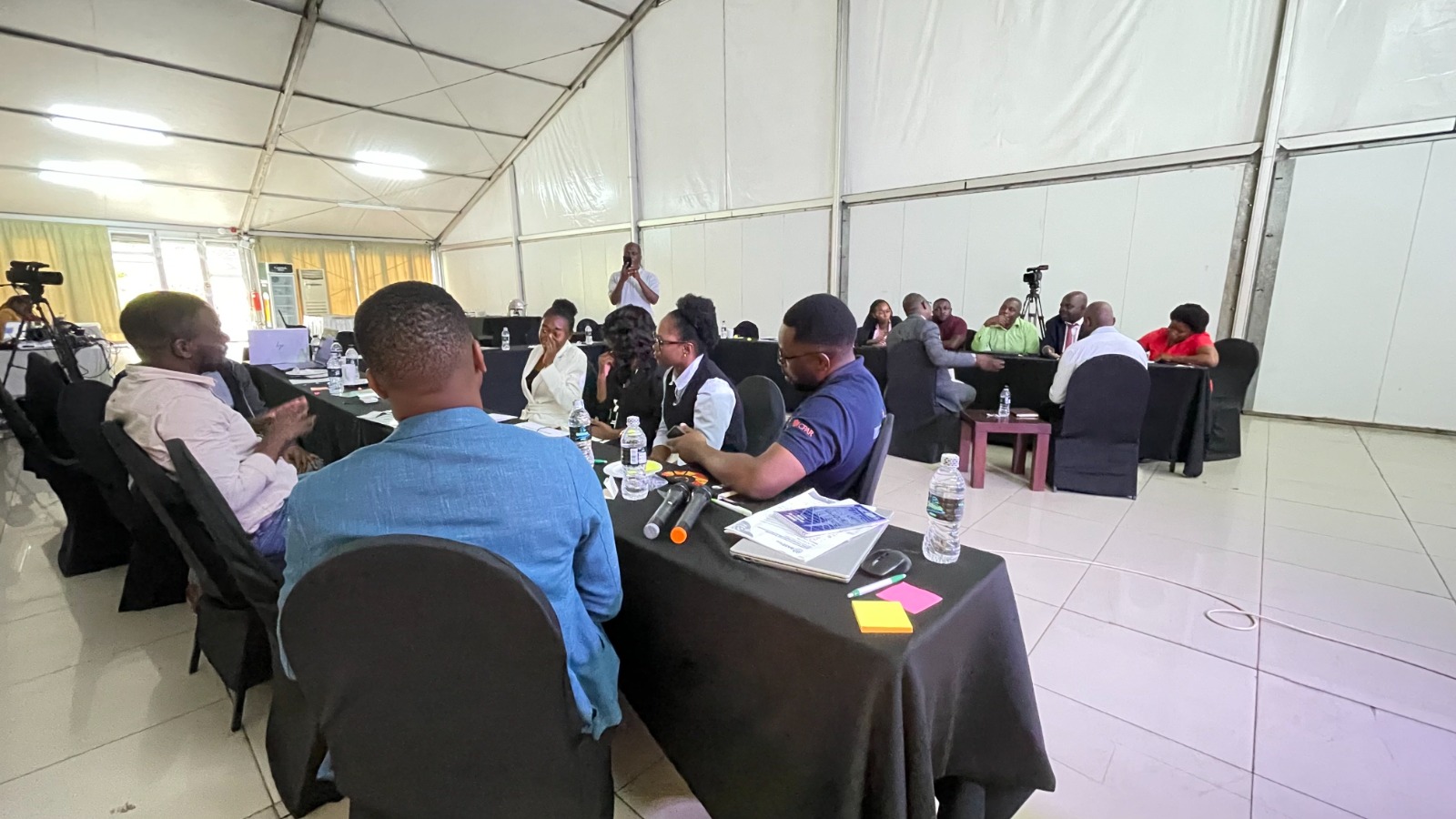
On 18 to 19 March 2026, a group of us gathered at Sunbird Capital Hotel in Lilongwe with a shared concern and a shared curiosity. There is growing anecdotal and empirical evidence, both locally and internationally, that Malawi is experiencing groundwater decline. That concern shaped the room and stood no contest. But alongside it sat a shared recognition: if we wait until the signs are obvious everywhere, we will already be too late. The question, then, was not whether action is needed, but how early we are willing to act.
Groundwater quietly supports most rural water supplies in Malawi. It is dependable, largely unseen, and often taken for granted. We only notice it when something fails. A borehole dries up. A river runs dy. A pump experiences low yield. People start walking further to access water. By that point, the window to act early has already closed, and what should have been prevention becomes recovery. As such, this workshop was about confronting something uncomfortable. If we know that groundwater decline is happening, why then are we still struggling to prioritise its management?
To delve deeper into that question, we turned the lens on ourselves. Before introducing any model, we asked a simple question: what assets does Malawi already have to combat groundwater decline?
The answers came quickly. A national network of groundwater monitoring wells. Established groundwater standards. A policy environment that supports water resources management. Technical expertise within government and universities. And a government that is, at least in principle, open to innovation.
Everything that we need was there, on paper. But that only sharpened the next question, if the assets exist, why are we not seeing the outcomes?
The monitoring well network exists, but much of it is not functional. Some wells are no longer transmitting data. Others have fallen into disrepair. In some cases, the infrastructure is there, but the system around it is not. Data is being collected, but not consistently, not integrated, and not always in ways that support timely decision-making. In one district, a monitoring well still stands, locked and intact, but the last usable reading sits months back in a paper logbook no one has returned to. And even where data exists, it often sits unused, gathering digital dust, disconnected from the decisions it was meant to inform.
At the local level, capacity remains uneven. Not enough people are trained or supported to engage with groundwater monitoring in a meaningful way. And even where data exists, there is often no clear pathway for it to trigger action.
Financing constraints cut across all of this. Monitoring systems require maintenance. Early action requires upfront investment. And prevention rarely competes well against more immediate demands on limited budgets.
So, essentially, while we may, as a country, have the required assets to address groundwater decline, these are not deployed in the way they were intended. So, the issue is not absence, but rather it is effective deployment. It was only after we had a clear ideal of Malawi's assets and constraints did, we introduce the model for an early warning system for groundwater security. At its core, the model is simple: bring data together, interpret it, generate warnings, act, and learn. But instead of asking how to implement it or why each stage of the model is important, the group were challenged with another unorthodox question:
Why would this fail?
That question was not immediately comfortable. One participant openly challenged it, questioning the workshop's decision to focus on what would not work (the negative), instead of building on what already does (the positive)? It was a fair challenge, but it also exposed a common habit. We are often good at identifying what works in isolation, but less willing to examine what prevents it from working at scale. Because systems rarely fail where they are strongest. They fail at the points we choose not to interrogate.
So, we leaned into it. At each stage of the model, we asked what would break it. What would cause it to fail.
For example, if we bring data together, what actually stops us? This is not just a technical issue. There is already ambiguity around who owns and manages water resources data, particularly between the National Water Resources Authority and the Ministry. That ambiguity is not neutral. When ownership is unclear, accountability weakens, coordination slows, and data becomes something to protect rather than something to use. The question is not whether data exists, but whether the system creates incentives to share it.
If warnings are generated, who trusts them, and who acts on them? Information does not move on its own. It depends on institutional alignment, credibility, and whether decision-makers see it as relevant to their mandates. A technically sound warning that is not trusted or not linked to decision-making pathways is unlikely to change outcomes.
If action is required, who has the authority to act, and who carries the cost? Local government structures are often closest to the problem and best positioned to respond. But authority has not fully shifted. National-level institutions still retain significant control, and there is a reluctance to fully devolve decision-making. The result is a familiar pattern. Local actors are responsible, but not always empowered, expected to act, but not always resourced. And without clarity on financing, even well-defined actions remain out of reach.
If follow-up is needed, who ensures that learning feeds back into the system? Without consistent monitoring, feedback, and adjustment, systems become static. And static systems struggle to respond to dynamic groundwater conditions, changing climates, and growing demand.
To guide the group's interrogation of this model, four principles, or rather conditions for scale, were articulated to undergo the conversations. These were:
- It has to be simple enough. If it is too complex for government systems to adopt and sustain, it will not move beyond design.
- It has to be good enough. Waiting for a perfect system delays action. A functional system that can improve over time is more valuable than a perfect system that never leaves the drawing board.
- Roles must be clear and grounded in reality. National government provides oversight and technical direction. Local government implements, responds, and, where possible, finances action. Without that clarity, responsibility becomes diffuse and accountability weak.
- It has to be cheaper enough. If it cannot be financed within existing or realistically projected budgets, it will not last beyond initial enthusiasm.
By the end of the workshop, the conversation had shifted. This was no longer about presenting a model. It was about confronting the gap between what we know and what we do and being honest about why that gap persists. It was evident that Malawi has good enough assets to take action now. The challenge is not to design something new, but to deploy what already exists, deliberately and realistically, within the constraints we have always understood, but chosen to ignore.
That means confronting and addressing what sits beneath the surface. Incentives that discourage data sharing. Authority that is not aligned with responsibility. Financing that does not match ambition. Accountability that is not clearly assigned. Groundwater may be invisible, but the constraints around managing it are not, and if those constraints remain unaddressed, the outcome is predictable.
Systems will continue to be designed in colour, implemented in black and white, and fail quietly in between.