

.jpeg)
.jpeg)
Across Malawi, rainfall is becoming more intense, more erratic, and more destructive. Floods are washing through communities, damaging infrastructure, and eroding soils, while groundwater levels continue to decline and boreholes fail earlier each dry season. This paradox, too much water at once and not enough when it is needed, points to a deeper problem. We are not capturing, storing, and returning rainfall to the ground at the scale required.
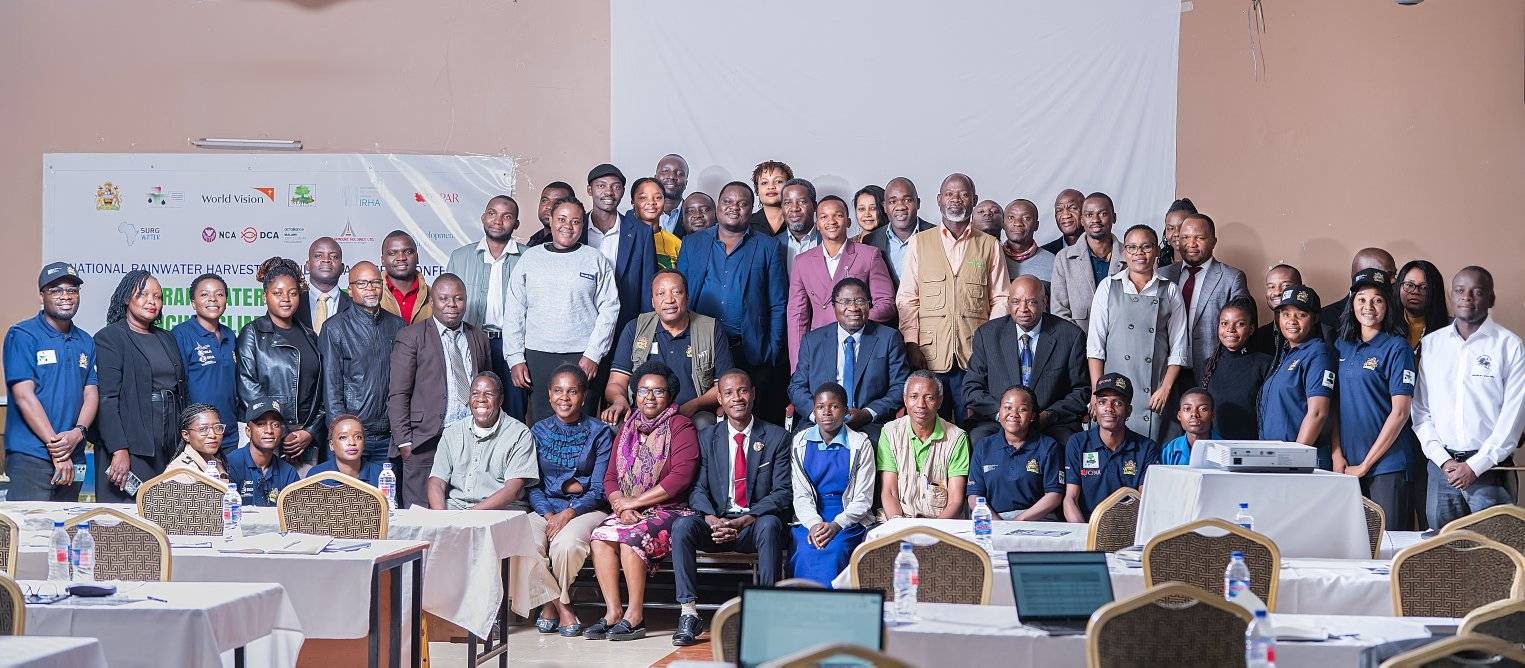
This challenge formed the backdrop to the recent 2025 National Conference on Rainwater Harvesting (20-21 November 2025), which convened in Lilongwe City and brought together practitioners, policymakers, and researchers to confront a simple but urgent question: how do we ensure that rainfall contributes to long-term water security rather than short-term runoff?
The conference made one thing clear. Rainwater harvesting is no longer a nice-to-have or a niche intervention. It is a core strategy for climate resilience, groundwater recovery, and sustainable water supply. From rooftop systems to landscape-scale recharge, the tools already exist. What is missing is prioritisation, integration, and scale.
As BASEflow, this message strongly resonates with the work we are already doing. Our approach to groundwater security is grounded in the belief that rainfall must be deliberately managed to replenish aquifers, not simply drained away. In practice, this has meant actively testing, implementing, and learning from a range of rainwater harvesting and recharge approaches, including:
- Converting abandoned or failed boreholes into recharge wells, allowing flood and stormwater to be directed back into aquifers rather than lost as runoff
- Piloting managed aquifer recharge (MAR) techniques using locally appropriate structures to slow, spread, and sink rainfall
- Promoting and replicating deep-bed farming, which improves soil moisture retention, enhances infiltration, and directly links agricultural productivity to groundwater recharge
These interventions are not theoretical. They are being tested, adapted, and refined in real communities facing real water stress. They reflect the same principles emphasised throughout the conference: that water security starts with the landscape, that groundwater and surface water must be managed together, and that rainfall is a resource we can no longer afford to waste.
The human consequences of inaction were powerfully articulated during the conference by frontline government staff. Speaking from Balaka District, which has experienced repeated droughts and acute water shortages, Mr Emmanuel Nkhonjera, Assistant Water Resource Officer for Balaka District, shared the following:
“For us in Balaka, rainwater harvesting is not an option, it is a lifeline. Every year, we lose crops, and sometimes even lives, because our soils fail to hold the little rain we get. I remember when the Southern Region Water Board borehole dried up in February of this year, Balaka Town was brought to its knees. Families lined up for hours to fetch water, clinics struggled to provide essential services, and businesses shut down. Our boreholes are failing because the ground beneath us is empty. We are withdrawing more water than nature can replenish. For districts like ours, rainwater harvesting is no longer an alternative. It is our only chance to restore our water sources and protect our people from future crises. If we can capture even a fraction of the rainfall that escapes us, we can change our story from scarcity to resilience.”
His words underline a reality that cannot be ignored. Rainwater harvesting is not just a technical intervention. It is about restoring balance between abstraction and recharge, and about protecting communities from increasingly severe climate shocks.
The National Conference on Rainwater Harvesting provided momentum, shared learning, and a clear direction. But conferences alone do not change outcomes. What matters is what follows.
Our call to action is therefore simple and direct. Government must embed rainwater harvesting and recharge into planning, standards, and public investment decisions. NGOs and development partners must move beyond pilots and integrate recharge systematically into water, sanitation, agriculture, and climate programmes. Urban planners, engineers, and educators must treat rainfall as a design input, not a drainage problem. Practitioners and communities must be supported with the tools, data, and financing needed to turn rainfall into stored water.
At BASEflow, we are committed to doing our part by testing solutions, generating evidence, and working with government and communities to scale what works. But groundwater security cannot be delivered by one organisation alone. It requires collective action and a shared commitment to refilling the ground beneath our feet. Everyone must do their part.
The rain is already falling. The question now is whether we choose to let it run off, or make it count.