


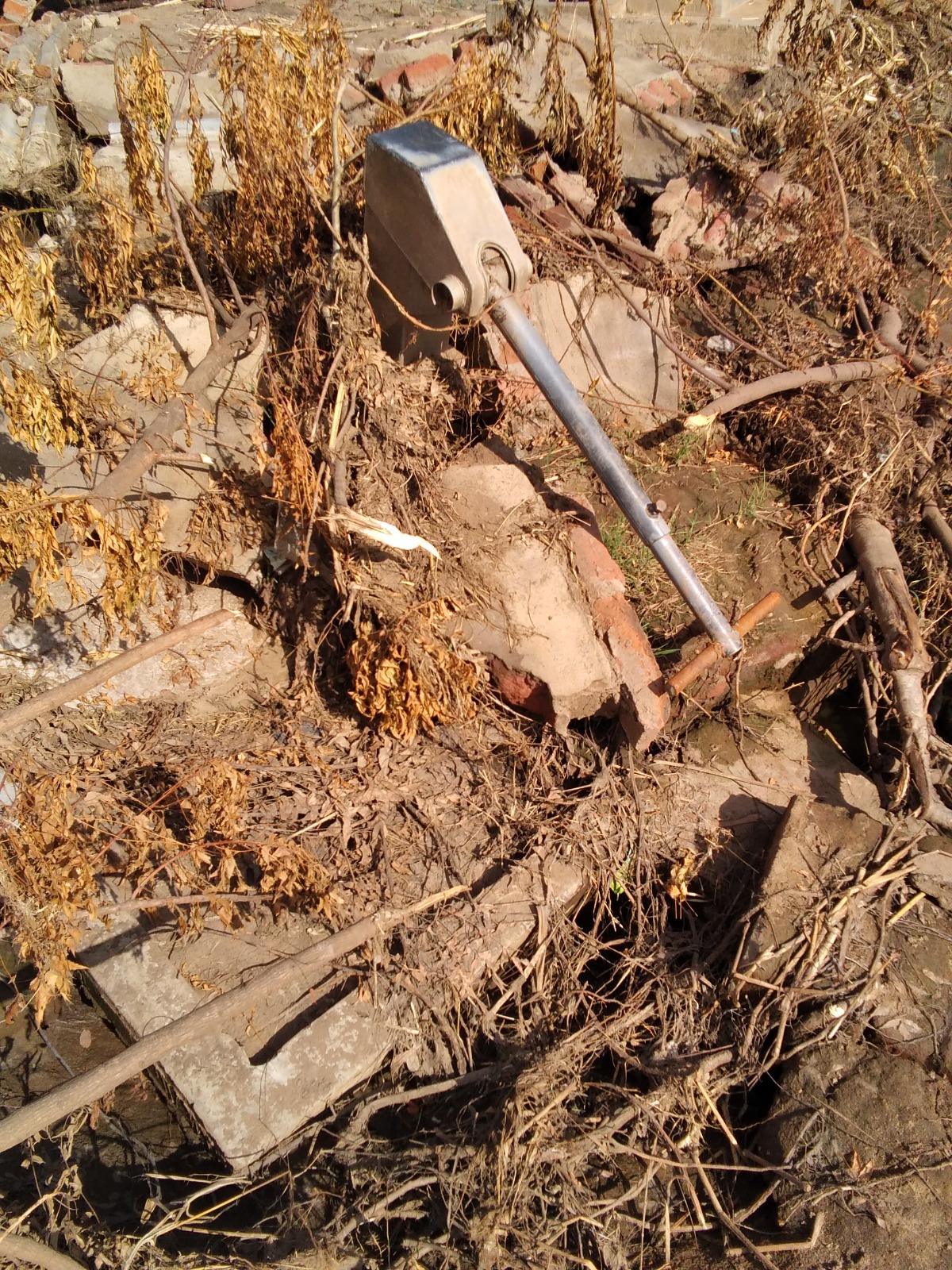


Climate change-induced disasters are increasingly threatening rural water infrastructure across Malawi. More frequent cyclones and floods have exposed the vulnerability of boreholes, often leaving communities without access to safe water when they need it most. These challenges have highlighted the need for solutions that go beyond engineering to ensure water services remain reliable during and after climate shocks.
Our Integrated Solution
Recognizing this, we introduced an innovative approach that combines flood-proofed borehole designs with borehole insurance and a dedicated investment fund. Our initiative not only protects boreholes from flood damage through elevated construction but also provides a financial safety net to restore services quickly if infrastructure is damaged by extreme weather.
Following the construction of ten flood-proofed boreholes in Traditional Authority Njema in Mulanje district, we secured insurance cover for the infrastructure. We designed the insurance to finance rehabilitation or reconstruction whenever climate-related damage occurred, minimizing service interruptions for beneficiary communities.
Creating a Sustainable Financing Model
While obtaining insurance was a significant achievement, we recognized that relying indefinitely on donor funding to pay annual insurance premiums would not be sustainable. To address this challenge, with support from Shockwave Foundation, we partnered with NICO Asset Managers to establish an investment fund dedicated to financing future insurance requirements.
In 2025, we placed an initial capital investment in a fixed deposit account earning an annual interest rate of 26%. We designed the model so that only the investment earnings, not the principal capital, would finance annual insurance premiums, insurance excess payments whenever claims arose, and any other applicable taxes. This represented an important shift from short-term project financing towards an endowment-style financing mechanism capable of protecting rural water infrastructure long after project implementation.
When Economic Conditions Change
However, our experience so far is already demonstrating that innovative financing models must adapt to changing economic conditions.
As Malawi's financial environment evolved, fixed deposit interest rates declined sharply from 26% in 2025 to 12% the following year. Although our investment capital remained intact, lower returns reduced the fund's ability to generate sufficient income to sustainably finance future insurance premiums. At the same time, Malawi's Value Added Tax (VAT) increased from 16.5% to 17.5%, raising concerns that insurance costs could also increase.
Despite these economic pressures, NICO Insurance maintained the insurance premium within the same pricing range as the previous year. According to the company's Underwriting Officer, this reflected NICO Insurance's commitment to supporting vulnerable communities through its Corporate Social Responsibility initiatives. This decision challenges the often-held assumption that private sector companies are solely driven by profit. When aligned with our development goals, private companies can prioritize people alongside profitability, strengthening community resilience against both climate and economic challenges.
What have we learnt so far?
Perhaps the most significant lesson from our initiative is that climate resilience depends as much on financial resilience as it does on engineering innovation. While our investment model remains fundamentally sound, the experience showed that investment returns are influenced by broader economic conditions and cannot always be predicted. Financing mechanisms must therefore be designed to absorb economic shocks just as flood-proofed infrastructure is designed to withstand physical shocks.
In response to these lessons, we are strengthening the investment model by increasing the principal capital to generate sufficient returns to sustainably finance future insurance premiums. Our revised model also adopts a conservative planning assumption of a 10% annual interest rate, creating a buffer against inflation and future declines in market interest rates. In addition, we are incorporating a dedicated investment growth component to gradually increase the capital base and further enhance the long-term sustainability of our financing mechanism.
Moving Forward
Rather than viewing declining interest rates as a setback, we have used the experience to strengthen the model and improve its long-term resilience. As climate risks continue to intensify, our experience offers an important lesson for the wider WASH sector: resilient infrastructure must be matched with resilient financing. Only by investing in both physical and financial resilience can communities be assured of safe, reliable water services when they need them most.