

.jpeg)
One of the many solutions that is yet to scale to address Malawi’s deepening water crisis is groundwater recharge, i.e. deliberate actions taken to create ‘water banks’ underground to replenish the groundwater. While we recognize that it is important that we build momentum by testing our own ideas, we do not believe in reinventing the wheel. We believe in learning from others. If we are going to build momentum towards groundwater recharge, both within our own work and towards its adoption by government, we have to learn from those already putting ideas into practice on the ground already.
We see groundwater recharge as a spectrum of technologies, from the simple and low-cost at one end to the complex and expensive at the other. At the low end sits deep bed farming, an approach we learned from Tiyeni and have already adopted. In simple terms, it breaks up the hard compacted layer beneath the soil so rainwater soaks down instead of running off, turning ordinary farmers into “water farmers” who help recharge the ground every season. We love it because it is cheap, easy to adopt, and adds no extra burden to communities.
That points to the lesson we keep coming back to. If a recharge approach is meant to be government-led, it has to pass three tests. It has to be cheap enough for government to afford, simple enough to run without too much specialised support, and good enough to actually achieve what we need. These three filters shape how we evaluate every new option, and where it sits on that spectrum. Recently, one option came onto our radar at the higher, more demanding end. That option is sand dams, and this is what we went to see in Neno.
A Visit to Neno
On 9 February 2026, we joined Self Help Africa (https://selfhelpafrica.org/ie/malawi/) and the Thyolo District Council to visit CARD’s (https://www.cardmalawi.org/) sand dam sites in Neno District, an eye-opening look at a technology that is simple in concept yet quietly clever in practice.
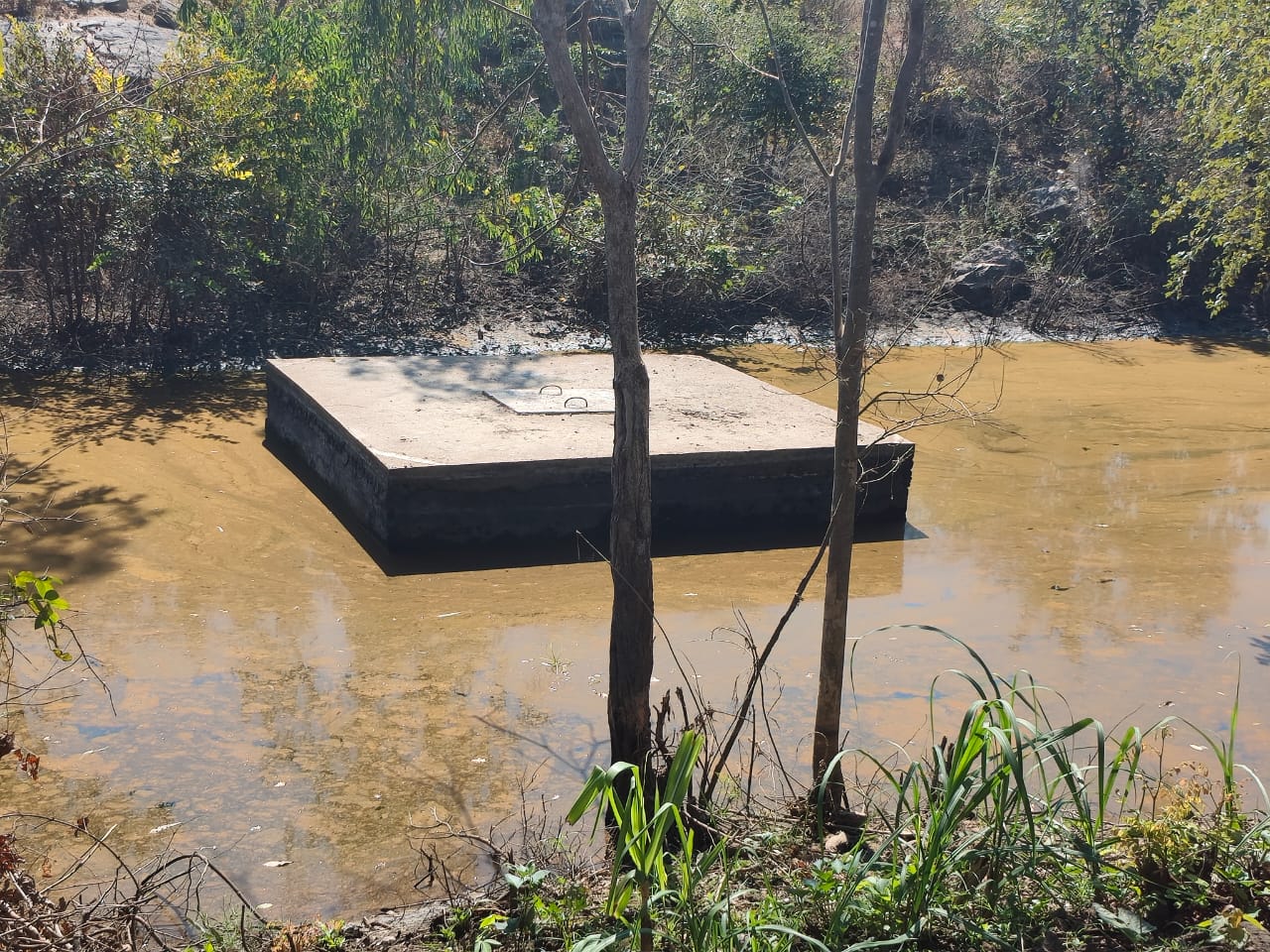
Neno knows water scarcity intimately. Dry boreholes and erratic rainfall are part of everyday life. To address this, sand dams have been built in carefully selected locations. These subsurface structures trap coarse sand and gravel in seasonal riverbeds, creating an underground store that can hold 20 to 50 million litres per dam through the dry season. In a country where complex hydrogeology often frustrates borehole drilling, this decentralised, climate-resilient approach felt well suited to the realities communities already face.
How a Sand Dam Works
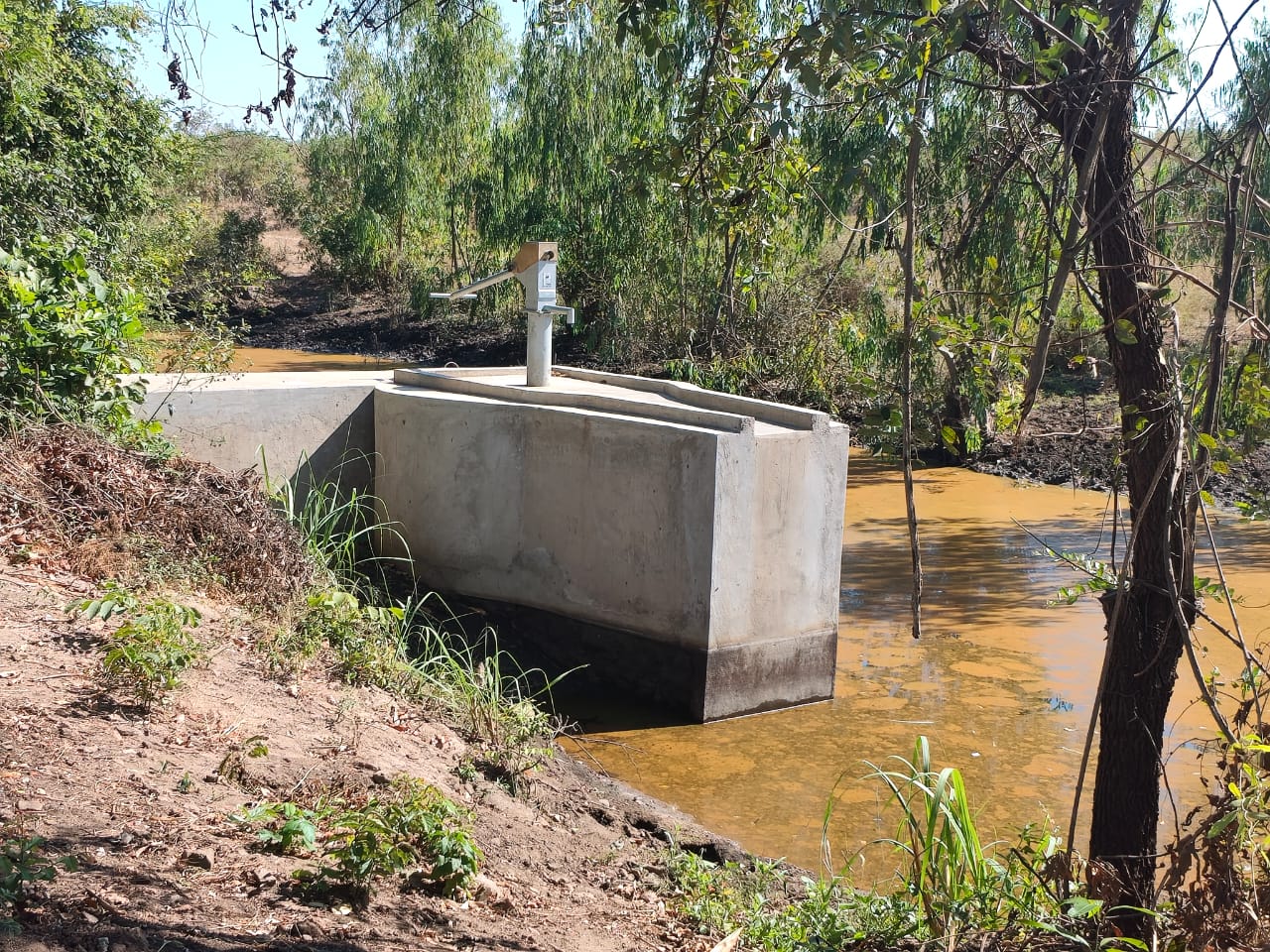
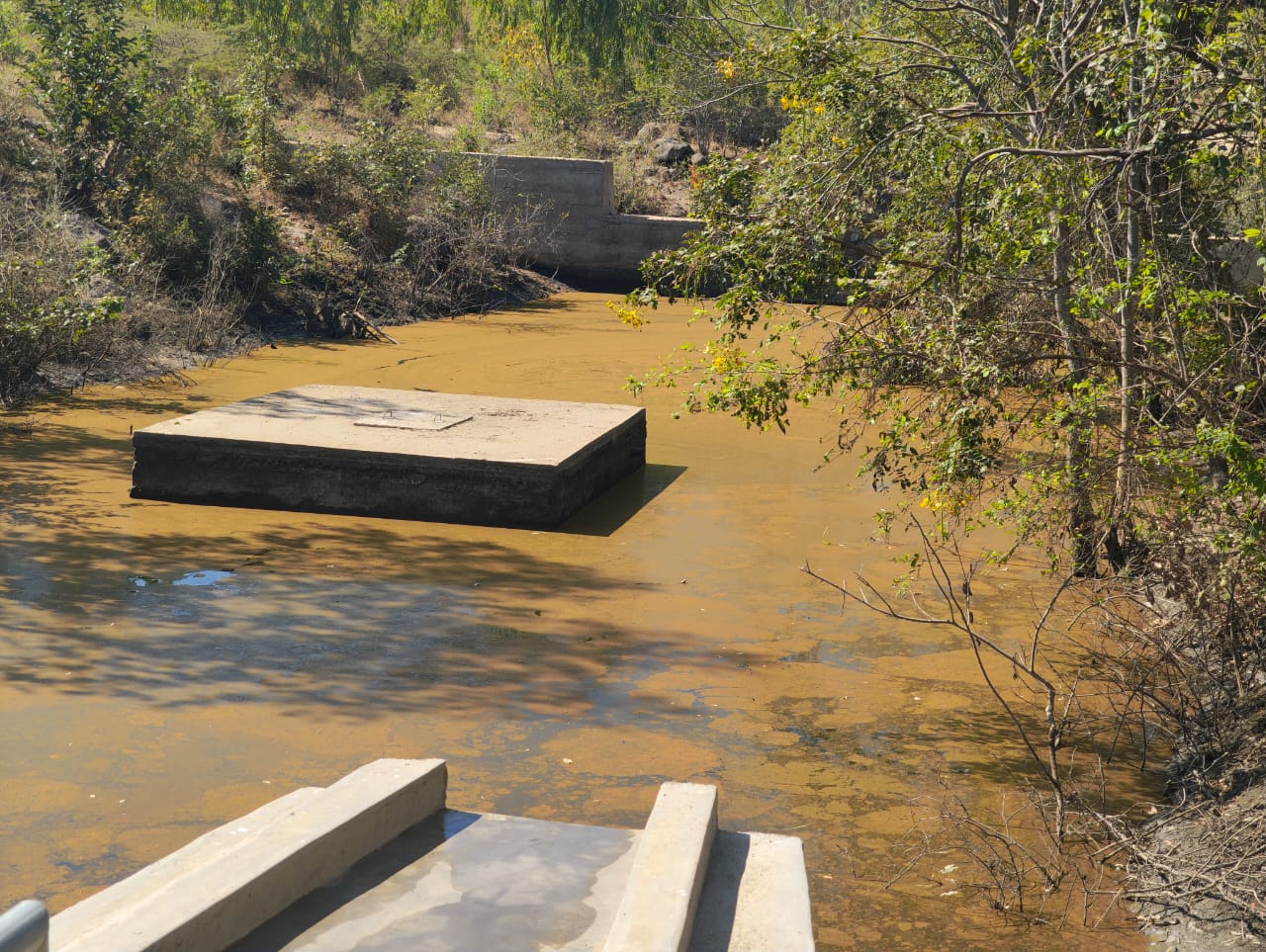
Sand dams are built across seasonal rivers with plenty of sand, stable banks, and solid bedrock underneath. They capture, store, and naturally filter water, and in doing so help recharge groundwater. A complete system has three parts and costs an estimated MWK 93 million, roughly US$ 53,568 at official June 2026 exchange rates.
The dam is a concrete wall across the riverbed. A spillway lets the river keep flowing while the structure traps sand and stores water, with wing walls anchoring it into the banks. The sump tank, roughly 3 m by 3 m, acts as both sedimentation tank and pump house, with one chamber where particles settle and another that houses the pump that supplies irrigation (The sump tank alone is valued MWK 20, Million or US$ 11,520 and is only included if the surrounding community intends to pursue irrigation-fed agriculture). The borehole beside the dam draws water from the saturated sand for domestic use, once laboratory testing confirms it is safe.
Together, the system improves water security, lifts agricultural productivity, and builds community resilience to drought.
Why Sand Dams Caught Our Attention
From a recharge point of view, sand dams have a lot going for them. They complement existing efforts rather than duplicating them, working in alluvial riverbeds, a different hydrogeological space from boreholes, which makes them useful precisely where borehole success is low. Crucially, the dam itself is a recharge mechanism. By slowing and trapping water in the sand, it encourages infiltration instead of letting seasonal flows rush away, potentially boosting nearby boreholes and shallow wells. The stored aquifer also recharges each year and resists the seasonal decline boreholes so often suffer. In the right conditions, water in the sump tank could even feed managed aquifer recharge schemes. A single dam can serve roughly 2,000 households or 9000 people while supporting irrigation, and given how many similar ephemeral catchments Malawi has, the model carries real replication potential.
Coming Back to the Three Tests
Promising as this is, our opening reflection still stands. Sand dams sit at the high end of the recharge spectrum, and an option that still has to answer the three key questions we raised earlier:
Good enough. Honestly, yes. The technology has real potential to address groundwater decline. The caveat is that it is highly site-specific, needing the right gradient, sediment load, and foundation, so not every catchment will suit it. The potential is real, but it lives in particular places.
Cheap enough. This is where we pause. At an estimated MWK 93 million per system, roughly US$ 53,568, the cost is prohibitive, and we have not yet included the running costs for the system. If an area needs several to make a difference, we have to ask whether local government could afford that without investment from philanthropy. For a government-led approach, that is a serious hurdle.
Simple enough. This is our biggest hesitation. Experience has taught us a blunt lesson, that the more technically complicated a system is, the more likely it is to fail. Sand dams still carry many technical components, including pumps, sedimentation chambers, water-quality testing, and ongoing watershed management to manage siltation. Without a proper management arrangement, whether at community level or through a social enterprise that earns revenue from the system, that complexity becomes a real risk.
So where does that leave us? Sand dams are an interesting addition to the recharge toolkit, but a high-end option, not a default one. We are looking at them cautiously and still reflecting on how, and whether, they fit, and what management model would need to sit alongside them, before pursuing them as a viable option that is cheap enough, good enough and simple enough for government to take forward on their own.